January 9, 2026

Behind the Scenes of Hamnet: Why Herefordshire Was the Perfect Backdrop
© Focus Features
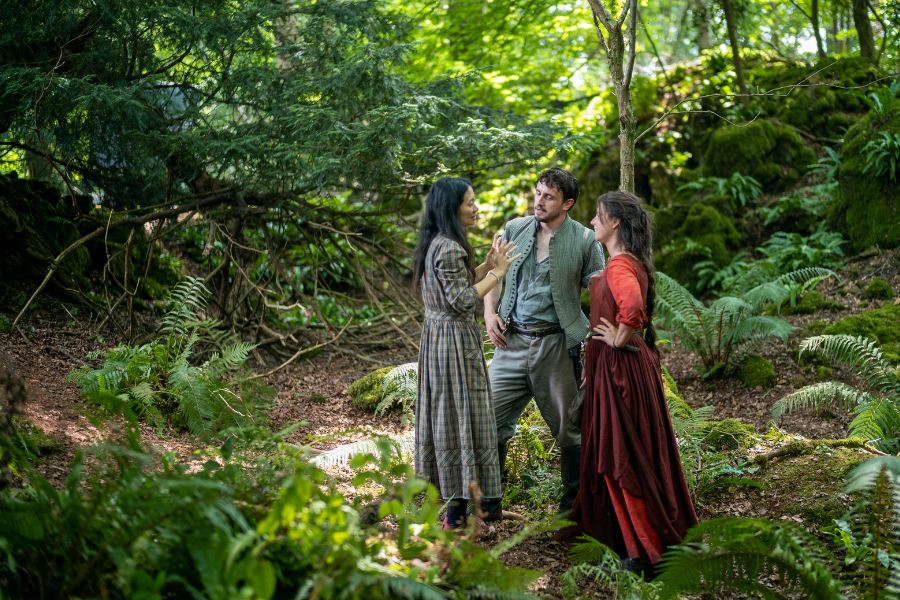
Parts of Herefordshire star centre stage in the new adaptation of Maggie O’Farrell’s acclaimed novel, Hamnet, now in UK cinemas. Setting the stage for the production, places like Weobley Village and the National Trust’s Cwmmau Farmhouse help to transport audiences back to late 16th-century England to tell this tragic tale.
Having first premiered across several international film festivals, the film has already taken the world by storm, receiving the Golden Globe for Drama Motion Picture, Actress in a Drama Motion Pictures, Director of a Motion Picture, amongst even more. This largely fictional retelling of William Shakespeare’s early years brings other characters to the fore including Shakespeare’s wife, Anne Hathaway, or more accurately, ‘Agnes’, and their children, including the book & film’s namesake, Hamnet.
The film brings to life the devastating loss of a child, its profound impact on William & Agnes’ world, and how grief expressed itself through William’s work on the stage of the Globe Theatre.
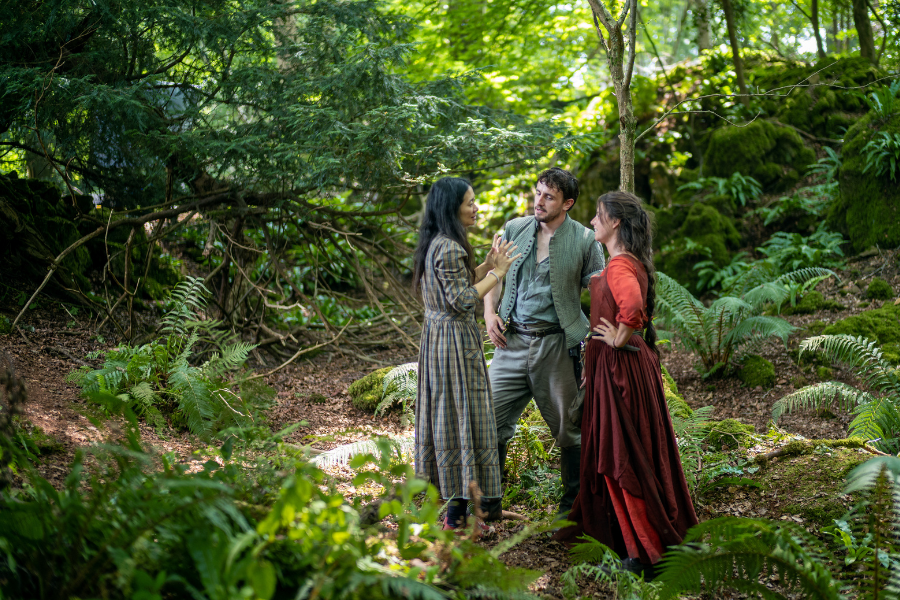
Co-written and directed by Academy Award winner Chloé Zhao and starring Jessie Buckley and Paul Mescal, alongside Emily Watson and Joe Alwyn in supporting roles, the production travelled to Herefordshire to capture much of the story’s main settings. Working closely with location manager, Lindsey Powell, the teams at Herefordshire Council, Herefordshire County BID & the National trust, this county set the scene for what will no doubt be a box office hit.
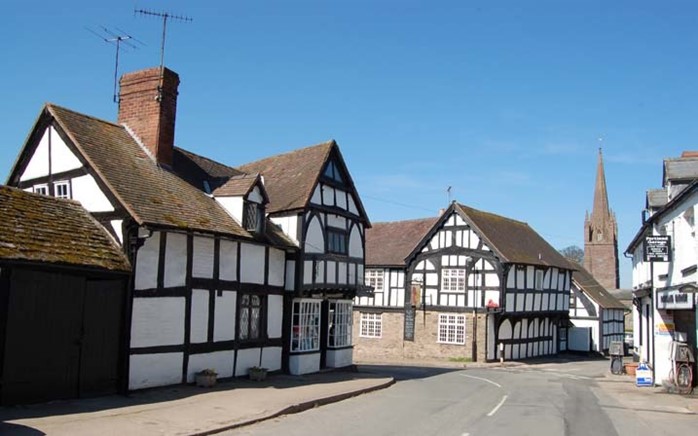
Weobley Village (view more pictures)
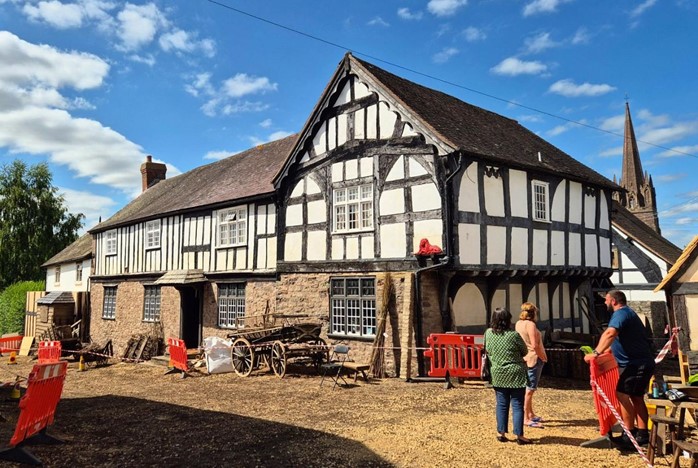
Weobley is renowned for its stunning timber-framed buildings, often called “black and white” houses, making it a great option for the film. A somewhat quieter twin to Shakespeare’s famous home of Stratford-Upon-Avon, the production was able to be based around Broad Street, Bell Square and Church Road for several months, capturing O’Farrell’s take on the playwright’s early years.
Beyond the set, this village boasts a number of unique locations including the historic Church of St. Peter and St. Paul, which features a Norman south doorway, a 13th-century chancel and 14th-century tower and a spire, and castle ruins.
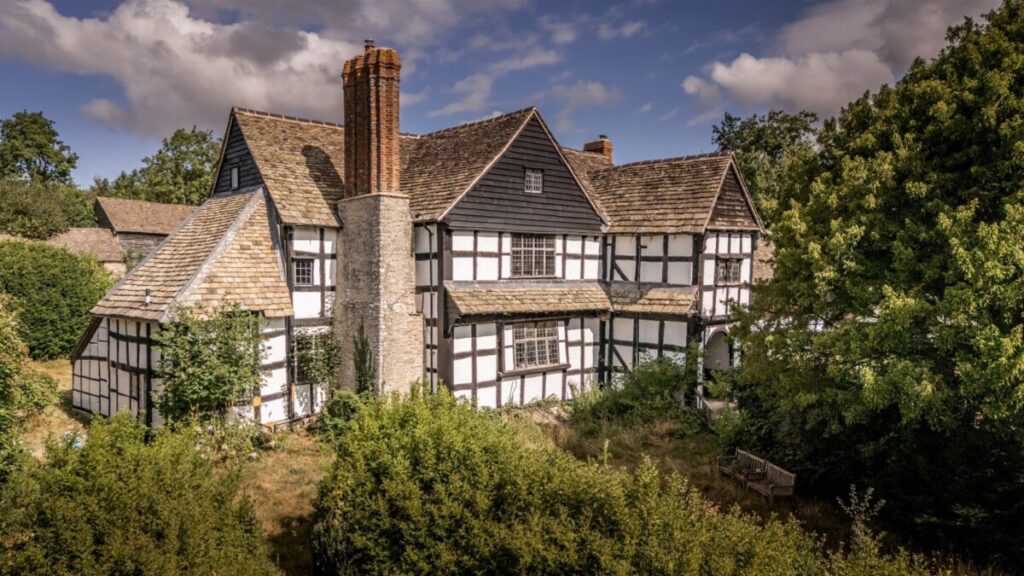
National Trust’s Cwmmau Farmhouse (view more pictures)
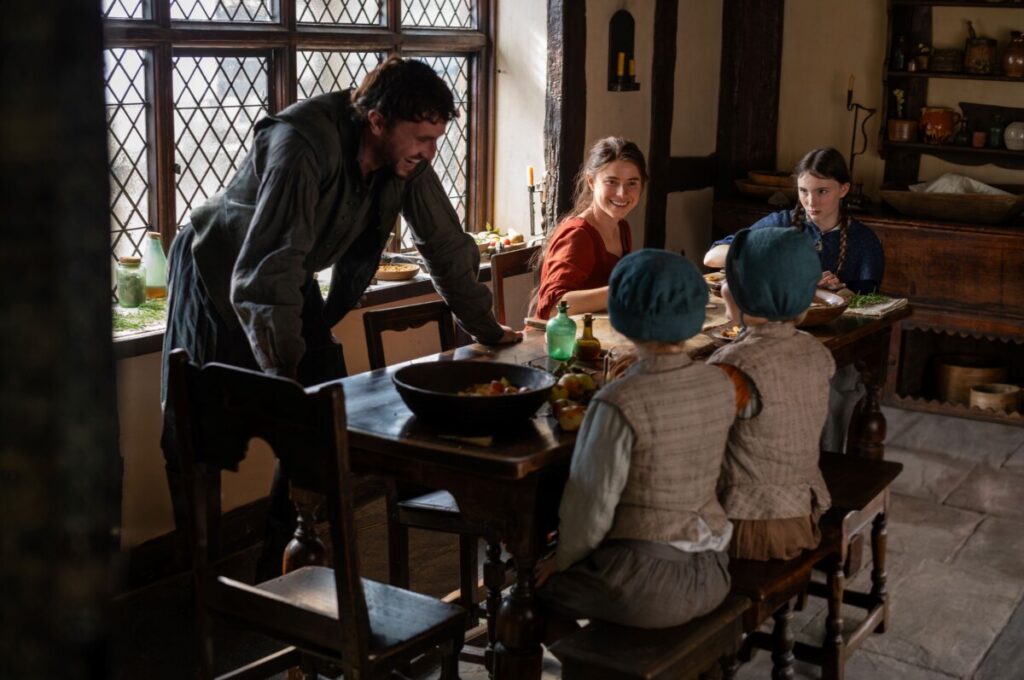
A short journey from Weobley Village, we find the National Trust’s Cwmmau Farmhouse which stood in as the exterior for Agnes’ home in the film. This striking 17th-century black and white timbered farmhouse, once at the heart of a significant farm, retains many of the original features and personal touches still in place.
The team at the National Trust worked together with the production to utilise this well-preserved location to set the scene. Emma Clarke-Bolton, Filming & Locations Officer, National Trust reflected on her time supporting the production:
“Cwmmau Farmhouse was scouted by the production’s Supervising Location Manager who was searching for a period farmhouse to host several scenes of the ‘Hamnet’ story. The abundance of perfectly intact original features meant it was a match made in film location heaven.
Following a significant consultation period, we were very proud to introduce 100+ crew and cast members to one of our most striking examples of medieval architecture in a rural setting, boasting idyllic meadows and views unspoiled by modernity.
Our very knowledgeable team of National Trust colleagues rallied to ensure that the production’s vision for the location could be realised without damaging the one-of-kind features of the building or disturbing the wildlife that call the farmhouse home. As part of a team effort, our project manager and estate manager also worked with the neighbouring National Trust tenant farmer to provide additional parking areas and logistics beyond the film set itself.
As the art department dressed the set, Cwmmau was teleported back in time; vegetable patches, young apple trees, a tutor room, and a busy kitchen were among the areas established that felt like an authentic visit to Shakespeare’s England. The production recognised the historical significance of the location and worked closely with conservators and the Farmhouse’s property team to not only leave the property undamaged, but to also improve the property positively for the future, donating apple trees to the garden and replacing a significant length of the period-appropriate wooden fencing near the farmhouse. The National Trust Film Office is delighted that the ‘Hamnet’ story is part of Cwmmau Farmhouse’s long history, and we hope that the film will inspire interest in the property for generations to come.”
Working with Herefordshire Council & Herefordshire County BID
Bringing such a large production to a small town in Herefordshire was no mean feat. When Supervising Location Manager, Lindsey Powell first approached the Filming in England team, she was scouting far and wide for some of the productions main locations. After seeing options in Herefordshire, the county quickly became a firm favourite.
“Taking a project to a relatively non filmed area of the Country can come with its challenges. However, from the moment that I first contacted Herefordshire Council, we received the upmost support with this project. Herefordshire Council and Herefordshire County BID attended site recces, online meetings and provided us with the necessary Council contacts to ensure that we could maximise our time spent in the County.
Rachel Jones guaranteed that liaison between myself, my team and the relevant highways, roadworks and street works departments were all in place and we felt supported throughout. We filmed at multiple locations across the County and received wonderful local support and contacts were made for life. Many of the crew still say they would travel back to Weobley for the Green Bean Cafe!
A special thanks to the residents, businesses and Parish Council in Weobley and surrounds for working with us and allowing the smooth closure of the village for multiple weeks. Herefordshire ticked all of the creative boxes needed for the briefs, historic villages, an outstanding Tudor Farmhouse and stunning landscapes a plenty. My thanks to all at Herefordshire Council, Herefordshire County BID, National Trust and Creative England for their assistance with the planning.”
With diligent and dedicated support from the teams at Herefordshire Council & Herefordshire County BID, the production’s vision would be made a reality. Rachel Jones, Herefordshire Council Economic Development Officer, said:
“We’ve already seen the eyes of the world on Herefordshire thanks to the Hamnet effect!
Tourism is a major growth sector for us – it’s already worth more than £700 million a year to the county’s economy – supporting growth across accommodation, food and drink, transport, retail, visitor attractions and more.
Collaboration is key. Our partnership working with the Herefordshire County BID and Creative England meant we could provide the service and support that the makers of Hamnet needed to enjoy a successful filming experience – and showed how the Council’s Location Service is flexible, integrated and effective in supporting production companies to make world-leading work for the screen.
Hamnet truly showcases our amazing historic and natural assets, and the film and surrounding excitement gives us a promotional platform that money can’t buy!
We’re grateful to Creative England for their expertise, support and making-it-happen approach which mirrors what we aim to offer. We’re looking forward to further promoting Herefordshire as a location to TV and film production companies and together boost the local and national visitor economy.”
Herefordshire County BID co-chairs Jo Hilditch and Glenn Jones also reflected on their time working with the production:
“We are proud to share a story of partnership, vision, and achievement that has put Herefordshire firmly on the global stage with this project.
When the producers of Hamnet were searching for the perfect backdrop to bring Shakespeare’s world to life they found the perfect location in Herefordshire. Our county’s stunning landscapes, historic villages, and rich heritage made it an ideal choice. But making this happen wasn’t just about beautiful scenery; it was about teamwork.
Herefordshire County BID and Herefordshire Council worked hand in hand for months to make filming possible. The Council’s Location Services team provided expert support managing road closures, traffic orders, listed building consents, and liaising with the studio to ensure everything ran smoothly.
Meanwhile, our team at Herefordshire County BID team pulled together location information, accommodation opportunities and championed the opportunity alongside Creative England and VisitBritain, creating marketing campaigns under the Visit Herefordshire brand to maximise the film’s impact for local businesses and tourism.
This resulted in a 300-strong crew spending six weeks here in the summer of 2024, bringing direct benefits to accommodation providers, restaurants, and local suppliers.
Beyond the immediate economic boost, this project showcases Herefordshire to millions worldwide, strengthening our £773 million visitor economy and positioning us as a film-friendly destination for future productions.
This achievement is a testament to what we can accomplish when public and private sectors unite behind a shared vision. The Herefordshire Film Office, a partnership between the Herefordshire County BID and Herefordshire Council, has proven that our county is ready and capable of hosting large productions and has ambitions to attract more in the future.”
Learn more about the local filming support provided by Herefordshire’s Film Office HERE.
Also featured in Hamnet: in the South East, the incredible Elstree Studios in Hertfordshire was used to build a full-scale set of the Globe Theatre! Find out more about Elstree Studios here.
Want to explore more locations? Search our nationwide Locations Directory to see over 8,000 outstanding locations: https://www.filminginengland.co.uk/locations/