

January 13, 2026

Invisible VFX: The Unseen Work Powering Film and TV
© Black Mirror, Netflix
As film and TV productions have grown bigger and bolder over the years, so too have the visual effects (VFX) teams that bring them to life. Their contributions are vast and essential, yet there’s a growing trend in some corners of the industry: a tendency to downplay or even deny the use of VFX altogether.
You may have seen interviews or promotional materials saying ‘no CGI was used’. This statement is designed to celebrate the incredible work of practical effects teams, whose artistry brings a unique and special realism to storytelling – and they absolutely deserve recognition in their own right.
The catch? Messaging like this can sometimes give audiences the wrong impression. A ‘no CGI’ tagline rarely means a total absence of digital effects. More often, it highlights a style of VFX that is designed to be invisible to the viewer.
When most people think of CGI and visual effects, we think of computer-generated monsters, flashy explosions, or sprawling landscapes. What we don’t think of are the smaller, more subtle effects that are essential for maintaining realism. In fact, many productions rely on invisible VFX – wire and rig removals, stunt cleanups, sky replacements and other adjustments – work that is specifically designed to go unnoticed, and keep the audience immersed.
Simon Carr, Creative Director of Vine FX, puts it perfectly:
“From missing photos on police incident boards, through light switches in Georgian houses, to distant cityscapes, invisible VFX are likely to exist in almost every contemporary production. Whether it’s adjusting continuity, adding to a landscape or replacing a phone screen, invisible VFX are the chameleons of the film world. You’ll never know they’re there.”
Of course, modern filmmaking isn’t just about the visuals – it’s also about doing it safely. Film and TV sets have strict safety standards, and every stunt we see on screen requires harnesses, wires, and crash mats – but leaving those in the final shot would completely break the illusion. And that’s where VFX steps in. Artists digitally remove the evidence, allowing audiences to fully experience the spectacle without ever realising the safety net was there.
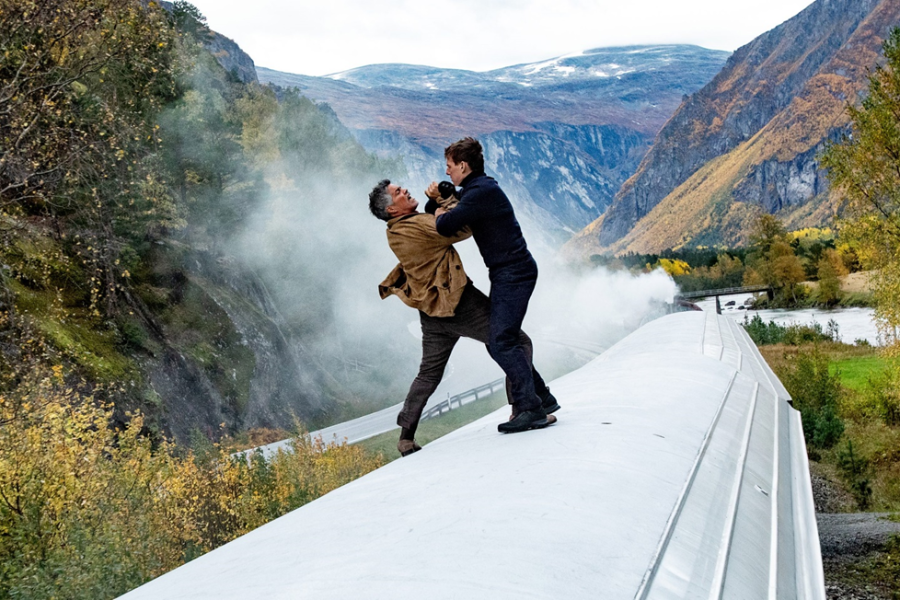
But invisible CGI isn’t just about fixing the mistakes – it’s also about enhancing authenticity. War films may add muzzle flashes, dust, and blood hits to complement practical effects. Period dramas will digitally erase modern objects. Not only that, but performance touch-ups – from wrinkle smoothing to eye adjustments to full digital body doubles – are increasingly common, ensuring audiences experience a seamless performance.
So why do some audiences hold a negative perception of VFX? Well, in many cases, it stems from moments where poorly executed effects stand out. Time pressures and budget limitations can also impact the final quality – often unfairly reflecting on the artists rather than time and financial constraints. When we think of CGI, we often focus on big, flashy moments and overlook the subtle, invisible work that quietly enhances most scenes. We also can’t underestimate the power of nostalgia – there’s undeniably a fondness for practical effects, which can make hands-on techniques feel ‘more real,’ even though practical and digital crafts work hand in hand to create the final result.
Yet, within the industry, there is a respect between practical and visual effects teams – practical effects often set the foundation, with VFX stepping in to refine and enhance. Together, they create a polished, believable world – even if we don’t always see the collaboration happening behind the scenes.
It’s also worth looking at this through the lens of the Academy, particularly when it comes to workforce recognition. At the 2025 Oscars, several films that had downplayed their use of visual effects in public-facing conversations still went on to qualify and be nominated in the Visual Effects category. Movies like Dune: Part Two – which took home the Best Visual Effects Oscar – and fellow nominees Alien: Romulus, Better Man, Kingdom of the Planet of the Apes and Wicked all incorporated extensive digital work. Yet much of the marketing around these projects focused on the performances, or “doing it for real” – yet behind the scenes, highly skilled VFX teams were responsible for a huge amount of invisible work.
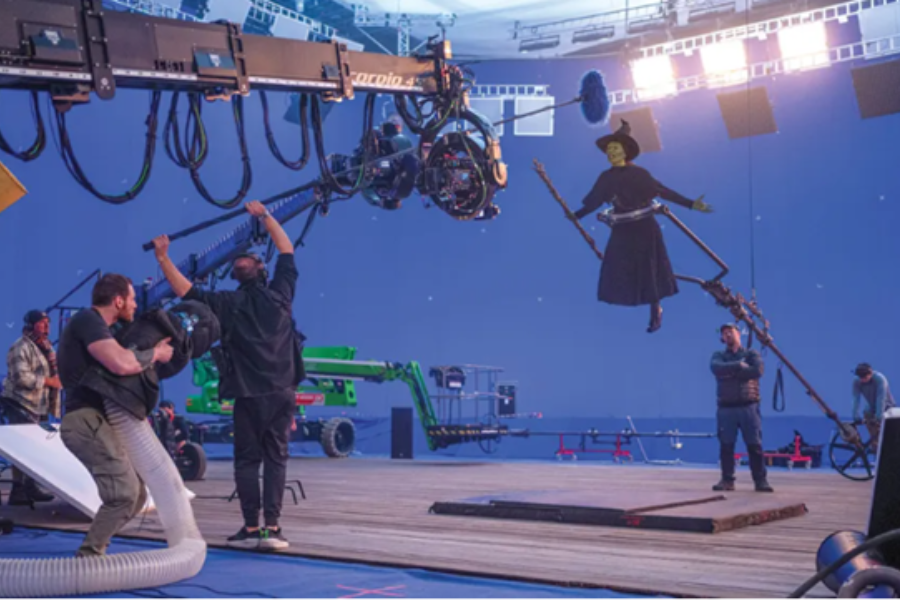
Gareth Kirkman, UK Business and Industry Development Manager for the British Film Commission, highlights the importance of VFX and how crucial it is for productions and the wider film ecosystem:
“Very few productions can be made without an array of subtle VFX work – whether it’s lighting fixes, set extensions, environment changes, clean ups, crowd replacements or screen graphics. In fact, ‘invisible VFX’ is actually a term often disliked by studio execs themselves, as well as talent and vendors. They’re paying for it – so it certainly isn’t invisible to them!”
This work isn’t just important because virtually every scripted feature or TV series includes it, but it is also vitally significant for the pipeline of work our VFX infrastructure depends on. In particular, shots and sequences of this kind are often done by the smaller companies that make up the majority our VFX community and can be found throughout all production hubs of the UK. The range and diversity of different talent and facilities is one of the key advantages of coming here for VFX. Academy Award winning, large companies doing blockbuster creature work are important, but so too are the boutique studios specialising in nuanced detail that stays ‘invisible’ to many.
Recognising the importance of VFX, under the newly introduced Audio Visual Expenditure Credit (AVEC), the UK Government introduced a new uplift on qualifying VFX work carried out in the UK as well as removing the 80% cap that now does not apply to UK VFX spend. These changes is expected to result in attracting an additional £175 million per year spending on VFX, creating thousands of jobs and helping to provide stability for England’s world class VFX crew.

Supporting this breadth of talent is vital to keeping the UK at the forefront of global VFX. That’s why Filming in England continues to champion regional crew and facilities, ensuring opportunities are accessible beyond London. Through our free Crew Directory, we help VFX artists and trainees connect with productions filming across the country. We encourage VFX professionals based in England (outside London) to register, so productions can more easily find and hire local talent.
When a production claims ‘no CGI,’ it usually refers only to the flashy, more obvious effects. In reality, almost every modern production relies on countless invisible digital enhancements – without them, even the most practical-effects-heavy films would feel incomplete. VFX artists don’t just add spectacle; they enhance immersion, support authenticity, and work hand in hand with practical effects teams. Far from undermining realism, visual effects are often the reason audiences experience films as believable and seamless. Both crafts deserve recognition for the magic they bring to the screen.
Want to browse our network of VFX Artists and Companies, and hire local crew and services for your production? You can search for crew and suppliers or contact our team to request crew calls for any open positions.
Special thank you to Vine FX and the British Film Commission for their contribution to this piece.